

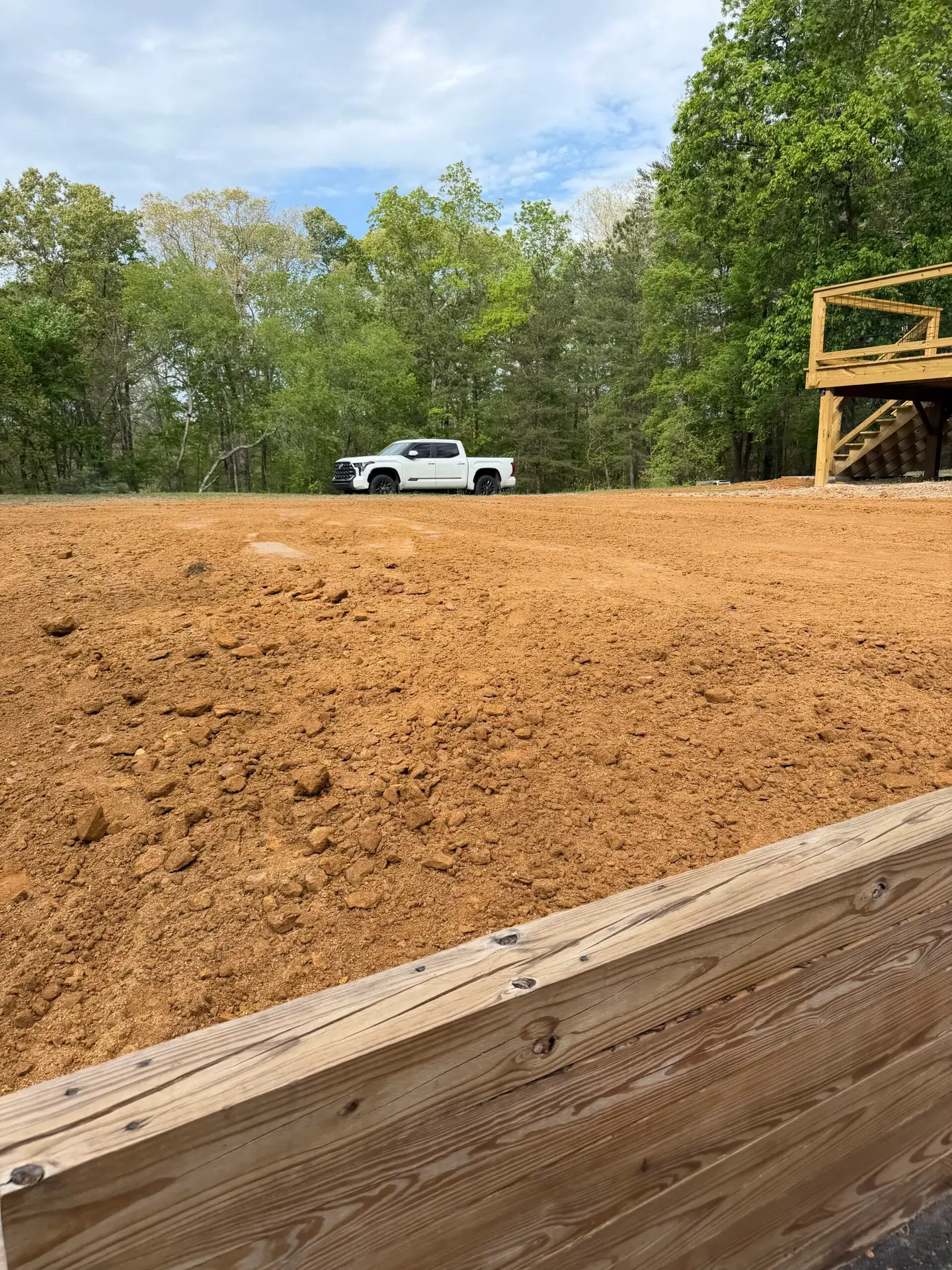
Preparing land for construction means making raw ground ready to safely support a structure. It covers land clearing, excavation, grading, drainage planning, and utility rough-in work — all completed in a specific sequence before a foundation is ever poured. Done correctly, site preparation is what separates a stable, lasting build from one that settles, floods, or fails early.
If you own raw land in North Georgia or Southern Tennessee and you’re planning a home build, this guide covers everything you need to know before the first machine rolls onto your property.
Why Site Preparation Is the Most Important Phase of Any Build
Most homeowners focus on the fun parts of a new build — floor plans, finishes, and square footage. Site prep doesn’t get much attention, and that’s exactly why it causes so many problems.
The ground beneath your home has to do a lot of work. It needs to support the weight of the structure, channel water away from the foundation, and stay stable through freeze-thaw cycles, heavy rain, and years of use. None of that happens by accident. It happens because someone prepared the site correctly before construction started.
Did You Know: Poor site preparation is one of the leading causes of foundation failure in residential construction. Water that pools around an improperly graded foundation doesn’t just cause cosmetic damage — it can undermine the structural integrity of the entire home over time.
When KNP Land Management comes out for a site prep estimate, the first thing we do is read the land. We look at how water naturally moves across the property, where slopes exist, what’s growing on the lot, and what the soil composition looks like. That read shapes every decision that follows.
Here’s a direct example of why this matters: on one property in Catoosa County, we identified a natural drainage channel running across the planned building pad that wasn’t visible from the road. The homeowner had no idea. Had we not caught it during the site walk — and rerouted the grade before work began — water from a 5-acre uphill run would have funneled straight under the foundation. That kind of problem doesn’t show up until it’s expensive to fix.
Step 1: Land Clearing — Getting the Property to Ground Zero
Before any grading or excavation can begin, the land has to be cleared. This means removing everything that doesn’t belong on a construction site: trees, stumps, brush, overgrowth, old structures, and debris.
The scope of clearing depends entirely on the lot. A partially wooded residential lot in Walker County might take a full day with a skid steer and a brush cutter. A heavily timbered 5-acre parcel in Dade County could take several days and require multiple machines.
What land clearing includes:
- Tree removal and felling
- Stump grinding or full stump removal
- Brush and undergrowth clearing
- Debris removal and disposal
- Rough grubbing (removing root systems from the topsoil layer)
The method matters too. Stump grinding leaves root material underground, which decomposes over time and can create voids. For building pads and foundation areas, full stump removal is the right call — even though it takes longer and costs more. Cutting corners on clearing creates problems years down the road when that decomposing organic material shifts beneath a slab.
Our land clearing services are a natural first step for most site prep projects. In many cases, clearing and site prep are scheduled together so the land moves from raw to ready in one continuous project.
Pro Tip: Before any clearing begins, have your property surveyed and the corners marked. Clearing the wrong trees — even by a few feet — can create disputes with neighbors or violate setback requirements. It’s a simple step that prevents expensive complications.
Step 2: Utility Marking and Pre-Construction Coordination
Once the land is clear, the next step before any digging begins is utility identification and marking. Both Georgia and Tennessee require you to contact your state’s one-call system before any excavation — in both states, you dial 811.
The lead times differ by state and matter for scheduling. In Georgia, utility companies have at least two full business days after your ticket is submitted to mark their lines. In Tennessee, the requirement is three full working days — 72 hours excluding weekends and holidays — before you can legally begin digging. Plan these windows into your project timeline before equipment is ever scheduled.
A technician will come out and mark underground lines including gas, electric, water, and telecommunications. This step isn’t optional. Hitting an unmarked gas line with an excavator is a serious safety event. Hitting a buried power line is worse.
For new construction on raw land, the utility marking conversation also includes:
- Identifying the nearest utility connection points
- Planning the route for water line installation
- Coordinating with the septic engineer if an on-site system is planned
This coordination stage is where experienced contractors save homeowners significant headaches. An owner-led operation like KNP doesn’t hand you off to a project coordinator — Nick handles this coordination directly with you, so nothing gets missed between the planning and execution phases.
Step 3: Excavation — Moving Dirt to the Right Depth
Excavation is the controlled removal of soil to achieve the correct depth and configuration for what’s being built. For a residential home build, this typically means digging down to a stable bearing layer of soil, then establishing the grade for the foundation footprint.
The depth required depends on several factors:
- The type of foundation (slab, crawl space, or basement)
- Local frost line depth (in North Georgia, the frost line runs 6–12 inches, and Georgia’s residential building code requires footings to extend a minimum of 12 inches below undisturbed ground)
- Soil type and bearing capacity
- Site drainage requirements
For slab foundations, which are common across this region, the excavation work focuses on cutting the building pad to the correct elevation and removing any organic material or soft spots that would cause uneven settling. Organic material — topsoil, root systems, decomposing debris — compresses under load. It has to be removed and replaced with compacted fill or engineered soils.
Our excavation services cover everything from simple building pad cuts to more involved foundation excavation on sloped or challenging terrain. The North Georgia and Southern Tennessee landscape includes a lot of rocky hillside lots where excavation requires more than just a standard dig — it requires the right machine operator with real experience reading terrain.
Did You Know: Soil that looks stable on the surface can be completely unsuitable for foundation bearing. Red clay — which is abundant throughout North Georgia — expands when wet and contracts when dry. Without proper compaction and base preparation, a foundation placed directly on native red clay will move seasonally, cracking slabs and walls over time.
Step 4: Grading — Shaping the Land for Drainage and Stability
Grading is where site prep transitions from removal to shaping. Once clearing and excavation are done, grading establishes the final ground contours that will direct water away from the structure, support paved surfaces, and set the foundation for everything that gets built on top.
There are two phases of grading on most residential builds:
Rough Grading happens during and immediately after excavation. This is the large-scale shaping work — establishing the building pad elevation, cutting and filling slopes, and setting up the basic drainage flow across the site.
Finish Grading comes later in the construction process, once the structure is framed and rough utilities are in. This is the fine-tuning: setting final yard grades, directing surface runoff away from the foundation, and preparing the site for landscaping or seeding.
The grading standard that matters most for residential construction is the slope away from the foundation. IRC Section R401.3 requires a minimum 6-inch drop over the first 10 horizontal feet away from the foundation wall. This is the grade that keeps surface water moving away from the building rather than pooling against it.
Visit our land grading services page for a full breakdown of what residential grading involves and when it’s needed.
Pro Tip: Grading and drainage aren’t just a construction requirement — they’re an insurance issue. Homes with improper drainage have higher claims rates for foundation damage, crawl space moisture, and water intrusion. If you’re building on a slope, take the grading phase seriously and don’t let anyone rush it.
Step 5: Foundation Prep and Footer Work
For most residential builds in this region, the site prep phase ends with foundation preparation — which means getting the building pad compacted, stable, and ready for the concrete crew.
This work includes:
Compaction testing and fill work. Any areas where soil was removed and replaced with fill need to be compacted in lifts — typically 6-inch layers that are compacted before the next layer goes down. This process can’t be rushed. Inadequate compaction is one of the most common causes of slab cracking and settling in residential construction.
Footer preparation. Footers are the concrete elements that transfer the load of the structure into the ground. In North Georgia, residential footers are required to extend a minimum of 12 inches below undisturbed soil, and must reach below the local frost line — which runs 6–12 inches in this region. The footer trenches need to be clean, level, and free of loose material before the concrete crew arrives.
Vapor barrier and sub-base preparation (for slab-on-grade construction). A compacted gravel base — typically 4–6 inches of clean crushed stone — goes down under the slab to improve drainage and reduce moisture transmission.
Site preparation in the context of a full home build is the stage where mistakes are most expensive to correct after the fact. A problem with the finish materials can be fixed during the warranty period. A problem with the foundation prep might not show up for three to five years — and when it does, it’s structural.
Permits and Regulatory Requirements in North Georgia and Tennessee
Permit requirements for site preparation vary by county and by project scope. In most cases, the site preparation work itself doesn’t require a standalone permit — but the construction project it supports does, and those permits often have conditions that affect how site prep is conducted.
In Georgia, residential construction permits are issued at the county level. Catoosa County, Walker County, Whitfield County, and Chattooga County all have their own building departments with different submittal requirements and review timelines. Erosion and sedimentation control plans are required for any land disturbance over one acre in Georgia under the state’s E&SC regulations.
In Tennessee, particularly in Marion, Sequatchie, and Bledsoe Counties (within KNP’s service area), similar county-level permit requirements apply. Tennessee also has specific setback requirements near waterways and protected riparian buffers that can affect site layout on lots near streams or creeks.
Pro Tip: Don’t assume your contractor handles permits automatically. Always ask, in writing, who is responsible for pulling which permits before work begins. A good contractor will be clear about this upfront — and will help you understand what’s required for your specific project and county.
How Long Does Site Preparation Take?
The answer depends on the size and complexity of the lot, but here are reasonable expectations for common residential scenarios in our area:
A standard residential lot (under 1 acre, moderate clearing required, relatively flat terrain) typically takes 2–4 days to clear, rough grade, and prep for construction. A more involved lot — heavily wooded, sloped terrain, or one that requires significant cut-and-fill work — can take 1–2 weeks or more.
Weather is a significant variable in North Georgia and Tennessee. Heavy rain can shut down site work for days, and working in saturated clay soil creates compaction problems. The best months for site prep in this region are typically late spring (April–May) and early fall (September–October), when the ground is workable and rainfall is more predictable.
Did You Know: Scheduling your site prep for late fall or early winter — when many contractors are less busy — can sometimes result in faster scheduling and better price availability. The tradeoff is potential weather delays, but for non-urgent projects, the timing can work in your favor.
What Does Site Preparation Cost?
Site preparation cost in North Georgia and Tennessee varies widely depending on the scope of work required. There’s no honest way to give a flat per-acre number because two adjacent lots can have completely different site prep costs based on tree density, terrain, soil conditions, and what the project requires.
That said, here are the cost drivers that matter most:
Land clearing density. A lightly wooded lot with small trees and brush clears out much faster than a heavily timbered lot. The difference in clearing cost alone can be $3,000–$10,000+ on a single-acre residential lot.
Terrain and grading requirements. A flat lot requires far less cut-and-fill work than a sloped or irregular site. Sites with significant slope changes may require retaining walls, additional drainage infrastructure, or more extensive grading hours.
Soil composition. Rocky sites — common on ridge lots throughout Walker and Dade Counties — require more machine time and sometimes specialized equipment. Sites with shallow bedrock may require blasting, which adds significant cost and complexity.
Debris disposal. What happens to the material that comes off the site affects cost. Hauling debris off-site costs money. Burning (where permitted by county ordinance) costs less. Grinding or mulching woody material on-site is often the most cost-effective option for brush and smaller trees.
The only honest way to get a real number is an on-site estimate. KNP offers free on-site estimates for all site prep projects — Nick walks the property with you, reviews the build plans, and gives you a straight answer on what it will cost and how long it will take.
Choosing the Right Site Preparation Contractor
Site preparation is heavy equipment work. The difference between a contractor who does it well and one who does it poorly comes down to experience reading land, operating equipment precisely, and understanding how the prep work connects to everything that comes after it.
Here’s what to look for when evaluating site prep contractors in North Georgia and Tennessee:
Owner involvement. Large crews with rotating operators often produce inconsistent work. An owner-operated company like KNP means the person with the most experience and the most accountability is the one running the equipment on your property.
Clear communication about scope. A quality contractor tells you exactly what’s included and what’s not — before work begins. Vague estimates that get padded later are a red flag.
Understanding of the full construction sequence. Site prep isn’t done in isolation. A contractor who understands how grading connects to drainage, how excavation connects to foundation work, and how all of it connects to utility installation is going to make decisions that serve the project as a whole — not just the current task.
References from similar projects. Ask for references from residential builds in your county, not just commercial projects or large-scale development work. The equipment skills transfer, but the attention to detail on a 0.5-acre residential lot is different from clearing 50 acres for a subdivision.
Site Preparation FAQs
What does site preparation include? Site preparation includes land clearing, excavation, grading, drainage shaping, utility coordination, and foundation prep work. The exact scope depends on the condition of the land, the type of structure being built, and local permit requirements. A professional site prep contractor will assess all of these factors during an on-site estimate.
Do I need to clear my land before site preparation begins? Land clearing and site preparation are closely connected — clearing is typically the first step of site prep. In most cases, clearing and site prep are handled together by the same contractor in a single mobilization, which is more efficient and less expensive than scheduling them separately.
How much does site preparation cost per acre in North Georgia? Site preparation cost per acre in North Georgia varies significantly based on lot density, terrain, and project scope. Lightly wooded, relatively flat lots will cost less than heavily timbered or sloped sites. The only accurate way to get a price is through a free on-site estimate — phone quotes are not reliable for this type of work.
Do I need permits for site preparation work? Most site preparation work in Georgia and Tennessee doesn’t require a standalone permit, but the construction project it supports will require building permits at the county level. Georgia also requires erosion and sedimentation control plans for land disturbances over one acre. Always confirm permit requirements with your county building department before work begins.
How long does it take to prepare a residential lot for construction? A typical residential lot under one acre takes 2–4 days for clearing, rough grading, and prep work. More complex sites — heavily wooded, sloped, rocky terrain — may take 1–2 weeks or longer. Weather delays are common in North Georgia and Tennessee, so build buffer time into your construction timeline.
Get Your Land Ready With KNP
Site preparation is too important to rush or to hand off to the cheapest bid. Every foundation issue, every drainage problem, every structural crack that shows up three years into a home’s life can often be traced back to something that wasn’t done correctly before the first board was nailed.
KNP Land Management handles site preparation for residential builds across Ringgold, Chickamauga, Tunnel Hill, Dalton, Trenton, and surrounding communities in North Georgia and Southern Tennessee. We offer free on-site estimates, owner-led project execution, and the kind of straight communication that makes a complex project easier to manage.
Contact KNP Land Management today to schedule your free site preparation estimate — call or text (423) 413-8147, or visit our site preparation services page to learn more about how we work.